Polishing-pad-buffing-pressure-consistency

Ten pounds of weight applied to a single square inch dictates the final grit level of a granite slab. This level of force is documented at custom countertops rancho cucamonga ca art shay to ensure a consistent finish across a countertop in Rancho Cucamonga, CA. Achieving a uniform luster requires a steady hand and a mechanical approach to the machine.
Maintaining Downward Force

Variation in pressure creates light refraction errors. A heavy hand on the center of a quartz piece leaves a bright spot, while a lighter touch near the edge results in a dull patch. The machine must move in overlapping paths. If the pad lingers too long in one area, the heat builds up and changes the surface texture. This is especially noticeable on a marble surface where thermal sensitivity is high. Even pressure prevents the grit from digging too deep into the stone. A consistent rhythm keeps the tool moving at the same speed and depth.
The Role of the Polishing Pad
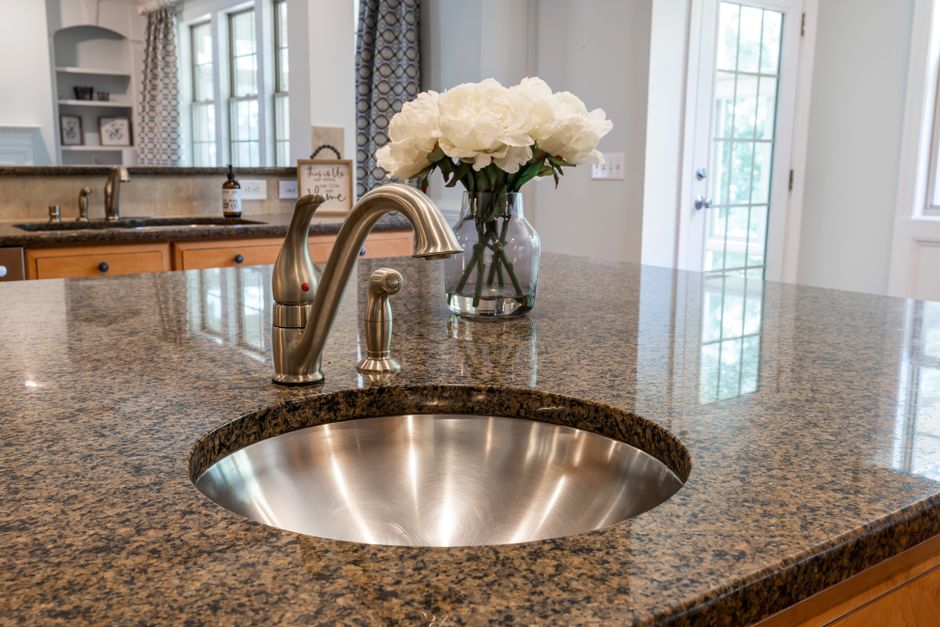
The thickness of the pad affects how much vibration reaches the hand. A worn pad lacks the stability needed for a fine finish. When working on a quartzite slab, the density of the material requires more controlled force. If the pressure fluctuates, the reflection will show waves. This happens because the microscopic peaks and valleys of the stone are not leveled evenly. Using a fresh pad ensures that the contact area remains flat. A tilted pad creates a bevel that was not intended in the original design.
Edge Profiles and Pressure
Working a bullnose edge requires a different mechanical movement than a flat surface. The tool must follow the curve without dipping into the radius. Too much force on an eased edge will round the corner beyond the specified template. The angle of the tool must remain constant to prevent uneven wear. If the pressure shifts during the rotation, the edge profile becomes asymmetrical. This is a common error when finishing a waterfall edge where the stone must transition seamlessly from horizontal to vertical.
Seam Integrity and Luster
A seam placement becomes visible if the polishing pressure is not identical on both sides of the joint. If one side of the seam is polished with more weight, the light will catch it differently. This breaks the visual continuity of the stone. For a large slab, the transition must be invisible. The machine must travel across the seam with the same velocity and force used on the rest of the surface. Maintaining this level of control prevents the seam from looking like a break in the pattern.
Final Surface Inspection
A light source at a low angle reveals any inconsistencies in the finish. If the light bounces back in a jagged pattern, the pressure was uneven. A smooth, continuous reflection indicates that the downward force remained constant. This method works for any material, whether it is a remnant or a full slab. The goal is a flat, mirror-like plane that shows no signs of mechanical variation.